One Point of Failure, Facility-Wide Consequences: Understanding the Contamination Ripple Effect in Vacuum-Dependent Manufacturing
Most facility managers understand, in principle, that industrial vacuum systems are critical to maintaining product integrity. What is less well understood is the precise mechanism by which a single system failure can compromise not just one process station, but an entire production line—sometimes within hours.
This is not a theoretical concern. Across US manufacturing sectors, from bulk food processing to sterile pharmaceutical fill-finish operations to tight-tolerance aerospace component machining, the pattern repeats with disquieting consistency: one vacuum failure, a delayed response, and suddenly quality control teams are tracing defects backward through three shifts of production output.
Understanding why this happens—and how quickly—is essential for any organization that depends on vacuum infrastructure to maintain product quality standards.
The Architecture of Interconnected Risk
Modern manufacturing facilities are rarely designed around isolated, independent process cells. Efficiency demands integration. Conveying lines share vacuum sources. Central vacuum networks serve multiple workstations simultaneously. Dust collection systems protect both personnel and product across wide production areas.
This integration creates operational advantages under normal conditions. Under fault conditions, it creates pathways for contamination to travel.
When a vacuum system loses pressure integrity—whether through a failed motor, a compromised seal, a blocked filter, or a ruptured line—the immediate effect is obvious: suction drops, material handling slows or stops, and operators notice. What is less obvious is what happens in the moments before anyone intervenes.
Negative pressure, when lost, can reverse. Particulate matter held in suspension within ducts and conveyance lines can be released back into the process environment. Contaminants that were being continuously evacuated from a work zone are suddenly no longer being removed. Depending on the nature of the material being processed, this can mean allergen cross-contact, foreign particulate introduction, or microbial exposure—all within a single production shift.
Case Context: Food Processing Environments
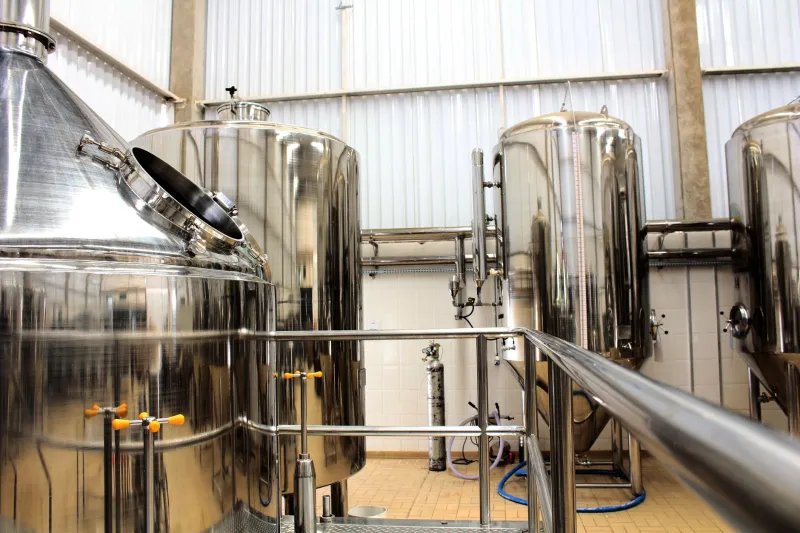
Consider a mid-scale dry ingredients processing facility operating a centralized vacuum conveying network to move product between mixing, portioning, and packaging stations. A motor failure on the primary vacuum producer occurs mid-shift. The system drops pressure. Within minutes, residual flour dust—previously captured and conveyed—begins settling across downstream packaging equipment.
The immediate problem is visible: a maintenance call, a production pause, a replacement part sourced. The less visible problem is the cross-contamination event that has already occurred. If the facility processes both gluten-containing and gluten-free product lines on shared equipment, that settled particulate represents a potential allergen violation. The recall risk alone dwarfs the cost of the failed motor by orders of magnitude.
In 2023, the FDA issued dozens of food facility warning letters citing inadequate environmental controls, many of which traced back to failures in dust and particulate management systems. Vacuum system reliability is not peripheral to food safety compliance—it is central to it.
Case Context: Pharmaceutical Manufacturing
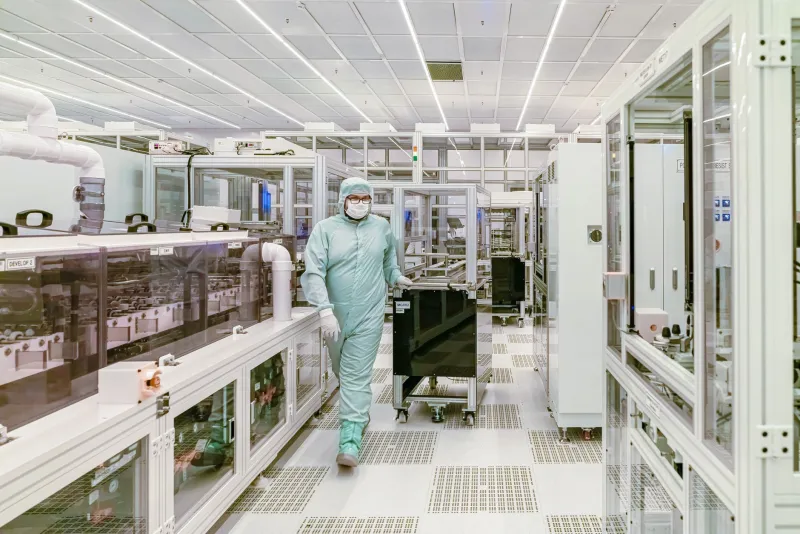
In pharmaceutical environments, the stakes are even higher and the tolerance for contamination even narrower. Cleanroom and controlled environment manufacturing depends on continuous, validated vacuum performance to maintain particulate counts within regulatory thresholds.
A vacuum system failure in a tablet compression suite, for example, can disrupt the dust extraction systems that prevent active pharmaceutical ingredient (API) cross-contamination between product changeovers. If that failure occurs during a changeover and is not immediately detected, the risk of API carry-over into the subsequent batch is real and documentable.
The regulatory consequence of such an event can include batch rejection, FDA Form 483 observations, and in serious cases, consent decree proceedings. The financial exposure from a single contamination event in pharma can reach into the millions of dollars when batch loss, investigation costs, remediation, and regulatory response are tallied together.
More critically, these events are almost never classified as "equipment failures" in final regulatory findings. They are classified as failures of contamination control—a distinction that matters enormously for a facility's quality management record.
Case Context: Precision Manufacturing
In precision machining and electronics manufacturing environments, the contamination cascade takes a different but equally costly form. CNC machining cells rely on vacuum workholding and coolant mist extraction to maintain part geometry and surface finish standards. Metrology labs depend on particulate-free environments to ensure measurement accuracy.
A vacuum failure that allows metallic swarf or coolant aerosol to migrate beyond its intended containment zone can compromise surface finishes on finished components, introduce debris into measurement equipment, or contaminate adjacent assembly areas. In aerospace and defense manufacturing, where component traceability requirements are stringent, a contamination event may require not just rework but full re-inspection and re-documentation of every part processed during the affected window.
The labor cost of that re-inspection effort, combined with potential delivery schedule impacts on government contracts, frequently exceeds the original equipment failure cost by a factor of ten or more.
Why the Response Window Is Shorter Than Most Teams Assume
One of the most consistent findings across contamination cascade events is that facility teams consistently underestimate how quickly contamination spreads after a vacuum failure. The assumption is often that a system can be offline for thirty minutes to an hour without meaningful product impact. In practice, the contamination window opens within minutes.
This is a function of airflow dynamics. Industrial environments are not static. HVAC systems, personnel movement, and equipment operation all create air currents that move particulate matter efficiently. A vacuum system that was actively containing those particles is, upon failure, no longer providing that containment function. The particles do not wait.
Facilities that have implemented real-time vacuum system monitoring—including pressure sensors, motor current monitoring, and automated alarm thresholds—consistently report shorter response times and smaller contamination footprints when failures do occur. The difference between a ten-minute response and a sixty-minute response can be the difference between a contained incident and a full production hold.
Building the Business Case for Redundancy and Preventive Maintenance
The financial case for investing in vacuum system redundancy and structured preventive maintenance programs is most compellingly made not by citing equipment costs, but by quantifying the contamination cascade risk that unprotected single-point failures create.
For food manufacturers, that calculation should include potential recall costs, regulatory action costs, and customer relationship impacts. For pharmaceutical manufacturers, it should include batch rejection rates, investigation labor, and regulatory risk premiums. For precision manufacturers, it should include rework labor, re-inspection costs, and schedule penalty exposure.
In virtually every case, the annualized cost of a robust preventive maintenance program and a modest redundancy investment is a fraction of the expected value of a single contamination cascade event.
Facility managers who approach vacuum system investment through a pure capital expenditure lens—asking only "what does this equipment cost?"—are evaluating only a portion of the relevant financial picture. The more complete question is: "What is the cost of the failure this equipment prevents?"
A Systemic Problem Requires a Systemic Response
The contamination cascade is not an anomaly. It is a predictable outcome of operating interconnected vacuum infrastructure without adequate monitoring, redundancy, and maintenance discipline. The facilities that experience it most severely are not, in most cases, poorly managed—they are facilities that have not yet mapped the full consequence chain of a vacuum system failure.
That mapping exercise is the essential first step. Understanding how vacuum systems connect to product quality outcomes, and how quickly a failure propagates through those connections, transforms vacuum infrastructure from a maintenance line item into a quality assurance priority.
At Mat-Vac Systems, we work with manufacturing facilities across the US to conduct exactly that kind of systems-level analysis—identifying single points of failure, quantifying cascade risk, and designing maintenance and redundancy strategies that protect both product integrity and operational continuity. The investment in that analysis consistently pays for itself before the first prevented failure.
The question is not whether your facility is vulnerable to a contamination cascade. The question is whether you have taken the steps to understand and manage that vulnerability before it becomes a crisis.