Vanishing Expertise: How the Industrial Vacuum Technician Shortage Is Threatening US Manufacturing Continuity
A Workforce Crisis Hidden in Plain Sight
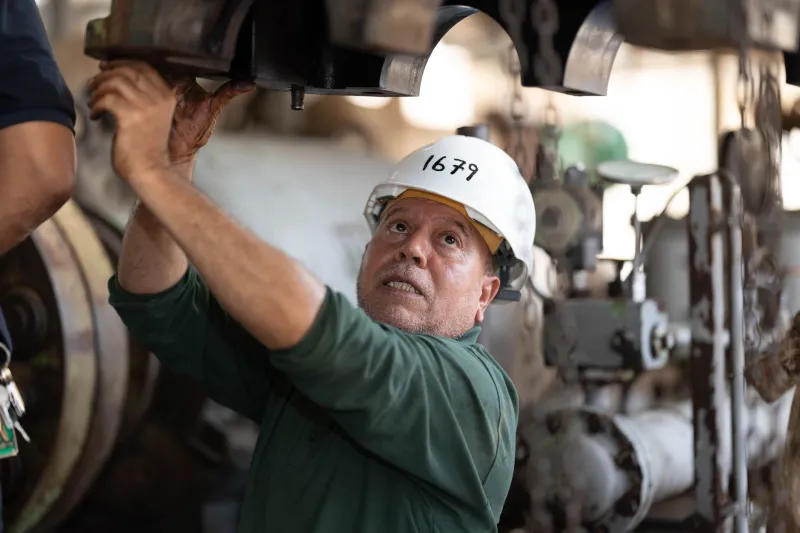
Walk the floor of almost any US manufacturing facility today, and you will likely encounter the same understated tension: equipment that demands specialized attention, and a maintenance team stretched far beyond its bandwidth. Industrial vacuum and material handling systems — the kind of infrastructure that keeps production lines moving, maintains air quality compliance, and protects workers from hazardous particulate — are particularly vulnerable to this dynamic.
The numbers behind the skilled trades shortage are well-documented in aggregate. What receives far less attention is the specific erosion occurring within the subset of technicians who understand industrial vacuum systems at a functional level. These are not generalist mechanics. Diagnosing performance degradation in a centralized vacuum network, calibrating conveying pressure for fragile bulk materials, or troubleshooting filtration failures in a regulated production environment requires a layered combination of mechanical intuition, pneumatic theory, and system-specific familiarity that takes years to develop.
When that knowledge disappears — through retirement, attrition, or simple neglect of workforce development — the consequences do not announce themselves immediately. They accumulate.
The Root Causes Behind the Knowledge Drain
Understanding why this shortage exists requires looking beyond the familiar narrative of Baby Boomer retirements, though that demographic shift is unquestionably a contributing factor. Across US industrial sectors, approximately 25 percent of the skilled trades workforce is expected to reach retirement age within the next decade, according to workforce development research from the Manufacturing Institute. In specialized niches like vacuum system maintenance, the pipeline of incoming talent is even thinner.
Several structural forces compound the problem:
Inadequate knowledge transfer programs. Many facilities have long relied on informal apprenticeship — the experienced technician who trains the next one through proximity and repetition. When retirements accelerate faster than this organic process can absorb, institutional knowledge evaporates rather than transferring. Documented procedures, system schematics, and maintenance histories often exist only in the minds of personnel who are no longer present.
Narrow vocational training pipelines. Community colleges and technical institutes have expanded their manufacturing curricula in recent years, but course offerings remain heavily weighted toward CNC machining, welding, and electrical systems. Vacuum system mechanics, pneumatic conveying, and dust collection technology rarely appear as standalone subjects. Graduates enter the workforce without foundational exposure to these systems.
Competitive wage pressure from adjacent industries. Skilled technicians who do develop vacuum system competency are frequently recruited by larger industrial employers or equipment OEMs offering more structured career advancement and higher compensation. Mid-size manufacturers — precisely the facilities that depend most heavily on experienced in-house maintenance staff — often struggle to match these offers.
Complexity creep from system upgrades. As facilities integrate vacuum systems with plant-wide automation platforms, remote monitoring tools, and data acquisition infrastructure, the skill requirements for effective maintenance expand. Technicians who were proficient with legacy pneumatic systems may find themselves underprepared for the diagnostic demands of networked equipment, widening the effective competency gap even among existing staff.
What Facilities Are Getting Wrong in Their Response
The most common reaction to a skills shortage is reactive hiring — posting a position, reviewing applications, and hoping someone with relevant experience applies. In a tight labor market for specialized trades, this approach consistently underperforms.
Equally problematic is the tendency to treat vacuum system maintenance as a task that can be absorbed by general maintenance personnel with minimal additional preparation. Industrial vacuum systems vary significantly in design, application, and failure mode depending on whether they are serving dry bulk conveying, dust suppression, process vacuum, or central cleaning functions. Assigning technicians without system-specific orientation to diagnose performance issues introduces risk of both incorrect repairs and accelerated component wear.
Facilities that outsource all vacuum system maintenance to third-party service providers as a stopgap measure may reduce their immediate exposure but surrender the in-house institutional knowledge necessary to catch developing problems early, communicate accurately with service vendors, and make informed capital decisions about system upgrades or replacements.
Building Technical Capacity That Lasts
The facilities that navigate this challenge most effectively share a common characteristic: they treat vacuum system expertise as a strategic asset to be cultivated deliberately, rather than a staffing problem to be solved reactively.
Formalize knowledge capture before it walks out the door. If your facility has veteran technicians approaching retirement, the most urgent priority is systematic documentation. This means recorded walkthroughs, annotated system diagrams, written troubleshooting decision trees, and structured interviews that extract tacit knowledge before it is lost. Even imperfect documentation is more durable than no documentation.
Develop relationships with regional technical colleges. Several community colleges and vocational programs across the US have shown willingness to develop customized curriculum tracks in partnership with local manufacturers. Facilities that invest in these relationships — through equipment donations, guest instruction, or co-op program sponsorship — gain preferential access to graduates and build a feeder pipeline for technical roles.
Create tiered competency frameworks for maintenance roles. Rather than treating vacuum system maintenance as a binary skill, define explicit competency levels with corresponding training milestones. An entry-level technician might be responsible for filter changes, visual inspections, and basic performance logging. An intermediate technician handles seal replacements and pressure calibration. Senior technicians manage system diagnostics, root cause analysis, and interaction with equipment vendors. This structure provides a visible career pathway that improves retention.
Leverage manufacturer training resources aggressively. Equipment manufacturers and distributors — including the team at Mat-Vac Systems — frequently offer application training, technical seminars, and remote support resources that are underutilized by end-user facilities. Enrolling maintenance staff in manufacturer-led training programs is one of the fastest ways to build system-specific competency without building an internal curriculum from scratch.
Consider cross-training as a redundancy strategy. In smaller facilities where a single technician may carry the majority of vacuum system knowledge, cross-training at least one additional team member creates operational resilience. The goal is not to create two experts, but to ensure that no single departure leaves the facility without any internal competency at all.
The Cost of Waiting
Facility managers who defer action on workforce development tend to discover its urgency at the worst possible moment — during a production-critical system failure with no qualified personnel available to diagnose it. The downstream costs of that scenario, from unplanned downtime to expedited service calls to accelerated component damage, consistently exceed what a proactive training investment would have required.
The vacuum system skills gap is not a problem unique to any single facility or region. It reflects structural shifts in the US industrial labor market that are unlikely to self-correct in the near term. Facilities that recognize this reality and respond with deliberate workforce investment will maintain a meaningful operational advantage over those that continue to rely on approaches that no longer match the environment they are operating in.
The expertise your systems require does not materialize automatically. It has to be built — and the time to begin building it is before the next failure, not after.