When Production Peaks, Systems Break: A Root Cause Analysis of Seasonal Vacuum and Material Handling Failures
Every year, US manufacturing facilities face a predictable paradox: the period when production demands are highest is also when equipment failures are most likely to occur. Conveying lines stall. Vacuum systems lose suction. Transfer rates fall short of targets. And the cost — measured in downtime, expedited repairs, and missed shipments — accumulates rapidly.
The frustrating reality is that most of these failures are not random. They are the foreseeable consequences of design decisions, deferred maintenance, and inadequate capacity planning. Understanding the root causes behind peak-season system breakdowns is the first step toward preventing them.
The Illusion of Adequate Capacity
One of the most common engineering oversights in industrial material handling is a system sized for average throughput rather than peak demand. A vacuum conveying system that moves bulk materials efficiently at 60 percent production capacity may perform adequately for eleven months of the year. But when a seasonal push drives output to 90 or 100 percent, the same system is suddenly operating at the outer edge of its design envelope — or beyond it.
This scenario played out at a Midwestern food processing facility that contracted with Mat-Vac Systems following a particularly costly holiday season breakdown. Their pneumatic conveying line had been specified based on standard daily production volumes. When Q4 demand surged, operators increased run times to compensate, inadvertently overheating the vacuum pump motors and accelerating wear on filter elements. The result was a cascade failure that halted operations for nearly 18 hours during the highest-volume week of the year.
The root cause was not a faulty component. It was a capacity gap that had been invisible during normal operations.
Filter Loading and Airflow Degradation
Another frequently underestimated failure point is filter condition. Vacuum systems depend on consistent airflow to maintain conveying velocity. As filter elements accumulate particulate matter, airflow resistance increases and effective vacuum pressure drops. Under normal production loads, this degradation may be gradual enough to go unnoticed. Under peak loads, the cumulative effect becomes acute.
Facilities that operate on fixed filter replacement schedules — rather than condition-based monitoring — are particularly vulnerable. A filter that is 60 percent loaded in October may be completely blinded by December if production volumes have increased significantly. Differential pressure gauges and continuous monitoring systems can provide early warning, but many facilities have not yet integrated these tools into their maintenance protocols.
The corrective action is straightforward: establish a pre-season inspection and filter replacement program tied to anticipated production increases, not just the calendar.
Bottlenecks Hidden in System Layout
Peak-season failures also reveal layout and routing inefficiencies that normal operating conditions obscure. Conveying lines with excessive horizontal runs, undersized transfer elbows, or improperly sequenced diverter valves may function acceptably at lower throughput. At elevated flow rates, however, material velocity increases, pressure differentials rise, and weak points in the system become failure points.
A plastics compounding operation in the Southeast discovered this after experiencing repeated material plugging in a conveying line during a high-volume production run. Engineering review identified two 90-degree elbows in sequence — a configuration that created a zone of turbulence and material accumulation under high-velocity conditions. The fix required replacing those elbows with long-radius sweep bends, a relatively modest investment that eliminated the plugging issue entirely.
The lesson: system layout decisions that appear inconsequential at design time can become operational liabilities when throughput demands intensify.
The Maintenance Debt Problem
Deferred maintenance compounds every other vulnerability. Worn pump seals, degraded hose connections, and aging motor bearings may not trigger immediate failures under light loads. But peak-season operation subjects these components to sustained stress — extended run times, higher temperatures, greater vibration — that accelerates failure progression dramatically.
US manufacturing facilities increasingly operate with lean maintenance teams, which places pressure on managers to defer non-critical repairs. The problem is that the classification of "non-critical" is often made during normal operations, when the consequences of component degradation are minimal. The same component becomes critically important when a facility is running at full capacity with no margin for unplanned downtime.
A structured pre-season audit — covering pump condition, motor thermal performance, hose integrity, and filter status — is not a luxury. It is a fundamental risk management practice.
Diagnostic Steps Before the Next Seasonal Cycle
Facilities that have experienced peak-season failures should conduct a formal root cause analysis rather than simply replacing failed components and resuming operations. The following diagnostic framework provides a starting point:
Capacity review: Compare system design specifications against actual peak-season throughput requirements. Identify the gap between rated capacity and operational demand during the highest-volume period.
Flow path analysis: Map the entire conveying route and identify any sections where material velocity, pressure drop, or routing geometry may create bottlenecks under high-flow conditions.
Maintenance record audit: Review the maintenance history of all critical components. Identify items that were deferred during the previous year and assess their current condition relative to expected peak-season stress.
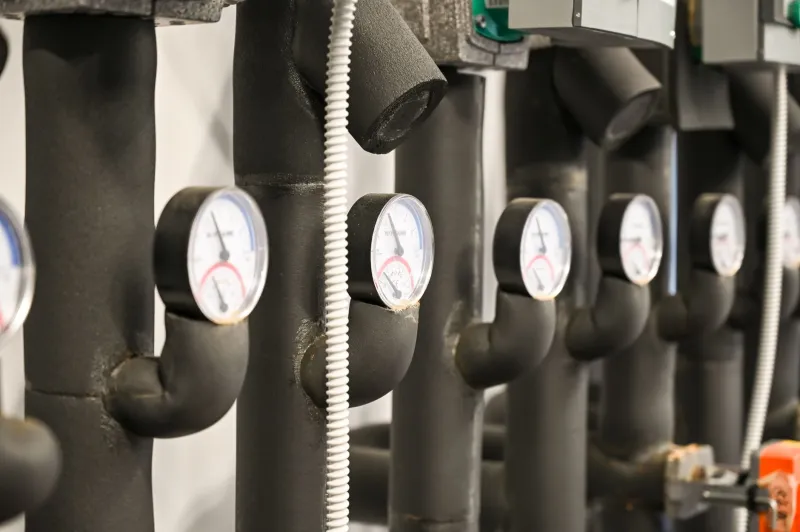
Monitoring infrastructure assessment: Evaluate whether existing instrumentation — pressure gauges, temperature sensors, flow monitors — provides sufficient visibility into system performance during high-demand periods.
Operational protocol review: Examine how operators respond to early warning signs during peak periods. In many facilities, operators compensate for system underperformance by adjusting settings in ways that mask problems and accelerate equipment wear.
Building Resilience Into the System
The goal of root cause analysis is not simply to explain past failures. It is to inform the design and operational changes that prevent future ones. For many facilities, this means investing in incremental capacity upgrades — larger vacuum pumps, additional filter capacity, or redundant conveying paths — before the next high-demand period arrives.
For others, it means implementing condition-based monitoring tools that provide real-time visibility into system health, enabling maintenance teams to intervene before a degraded component becomes a failed one.
Peak-season breakdowns are predictable. With the right analytical approach and a commitment to proactive investment, they are also preventable. The facilities that understand this distinction are the ones that meet their Q4 shipping commitments — and protect their bottom line when it matters most.