The Smart Factory's Missing Link: Connecting Vacuum Systems to Your Industry 4.0 Infrastructure
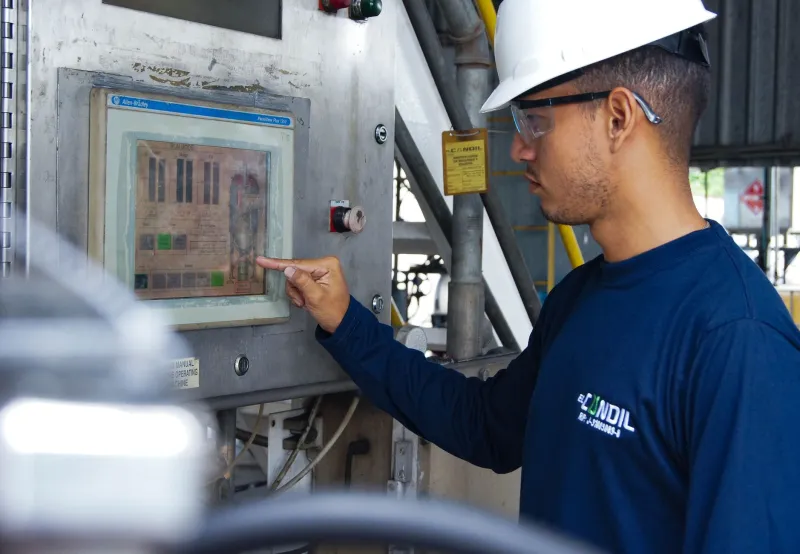
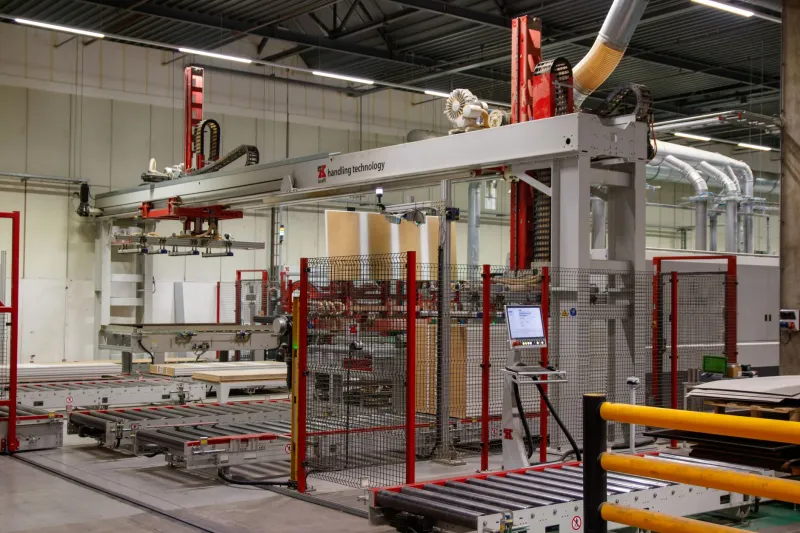
American manufacturers have spent the better part of the last decade building out smart factory infrastructure. Programmable logic controllers communicate with enterprise resource planning platforms. Robotic arms report cycle times to cloud dashboards. Conveyor systems flag anomalies before a supervisor ever sets foot on the floor. Yet in facility after facility, one critical category of equipment continues to operate in near-total informational isolation: industrial vacuum and material handling systems.
This is not a minor oversight. Vacuum systems are load-bearing infrastructure in virtually every sector of modern manufacturing—from pharmaceutical powder transfer to food processing to heavy industrial bulk material conveyance. When these systems underperform or fail unexpectedly, the downstream consequences are immediate and costly. The irony is that the same digital tools now standard in other areas of the plant could prevent the majority of those failures. The challenge lies in connecting them.
Why Vacuum Systems Have Lagged Behind
The gap between vacuum technology and digital integration is not purely a function of technological limitation. Much of it traces back to procurement and operational culture. Vacuum systems have historically been purchased as durable capital assets—equipment expected to run for years with minimal intervention beyond routine maintenance. That longevity, while commercially appealing, created a large installed base of legacy equipment that predates modern communication protocols entirely.
Many facilities operating today are running vacuum units manufactured in the 1990s and early 2000s. These machines were built without onboard sensors, digital output ports, or any native capacity to interface with a SCADA system or industrial IoT platform. Retrofitting them requires external instrumentation, protocol translation, and middleware that most maintenance teams are not resourced to implement independently.
Vendor fragmentation compounds the problem. A typical large manufacturing facility may operate vacuum equipment from three or four different manufacturers, each with proprietary data formats and communication architectures. Achieving a unified data view across those systems—the kind that feeds a meaningful operations dashboard—demands integration work that is neither simple nor inexpensive.
What Connected Diagnostics Actually Delivers
Before making the case for investment, it is worth being precise about what industrial IoT integration in vacuum systems actually provides—and what it does not.
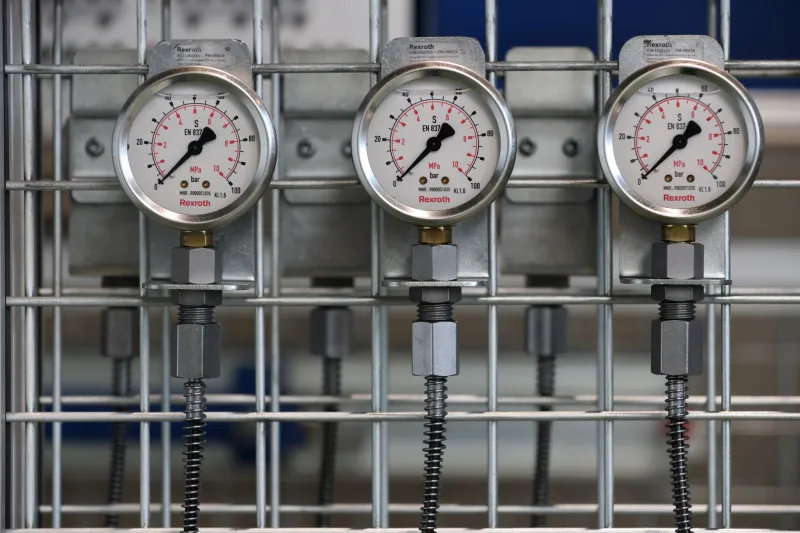
At its most fundamental level, connected vacuum diagnostics gives facility managers continuous visibility into operating parameters: suction pressure, airflow volume, motor temperature, filter differential pressure, and run-time hours. These data streams, collected at intervals as short as seconds, form the foundation for two categories of value.
The first is real-time alerting. When a filter approaches its loading threshold or a motor begins drawing anomalous current, an integrated system can notify a technician immediately rather than waiting for a production shutdown to make the problem visible. For facilities running continuous operations—particularly those in chemical processing or food manufacturing where contamination risk is a factor—this capability alone can justify the integration cost.
The second, and ultimately more valuable, category is predictive analytics. When sensor data is collected over months and correlated with maintenance records and failure events, patterns emerge. Bearing failures in vacuum pumps, for example, frequently show detectable vibration signatures weeks before mechanical breakdown. Filter blinding in dust collection systems follows load curves that, once characterized, allow maintenance scheduling to shift from calendar-based intervals to condition-based triggers. The result is less unplanned downtime, lower parts consumption, and more efficient labor allocation.
The ROI Calculation Facility Managers Need to Make
For capital expenditure justification purposes, the financial case for vacuum system integration rests on three quantifiable variables: the cost of unplanned downtime in your facility, the current labor hours devoted to reactive maintenance, and the consumable spend associated with time-based rather than condition-based filter and component replacement.
A mid-sized US manufacturing operation running two shifts might experience four to six vacuum-related unplanned downtime events per year, each averaging two to four hours of lost production. Depending on the product and margin profile, that exposure can represent anywhere from $50,000 to several hundred thousand dollars annually. Predictive diagnostics, conservatively applied, can reduce that frequency by 40 to 60 percent based on documented outcomes from comparable implementations.
Labor savings are similarly tangible. Technicians performing scheduled inspections on equipment that does not yet need service represent a real cost. Conversely, technicians dispatched to investigate an alert on a specific unit, armed with trend data that narrows the probable cause before they arrive, resolve issues faster and with fewer return visits.
Retrofit instrumentation costs have declined substantially in recent years. A sensor package capable of monitoring pressure, temperature, and vibration on a single vacuum unit can now be sourced for well under $2,000 in most configurations. When amortized against the downtime and maintenance savings described above, payback periods of 12 to 24 months are achievable for facilities with meaningful vacuum system footprints.
A Practical Roadmap for Integration
Facility managers approaching this challenge for the first time benefit from a phased strategy rather than an attempt to instrument everything simultaneously.
Phase one should focus on asset inventory and criticality ranking. Not every vacuum system in a facility warrants the same level of monitoring investment. Systems that are directly in the production critical path—those whose failure would halt a line or trigger a compliance event—represent the highest-priority targets. Document the make, model, age, and current maintenance history of each unit before selecting any instrumentation.
Phase two involves sensor selection and protocol alignment. Work with your controls engineering team or a qualified systems integrator to identify sensors compatible with your existing PLC or SCADA infrastructure. Where legacy equipment lacks communication ports, external transmitters with analog 4-20mA outputs or wireless protocols such as IO-Link or WirelessHART provide a viable bridge. Standardizing on a single communication protocol across your vacuum assets, even if it requires adapters, dramatically simplifies the data aggregation step.
Phase three is data contextualization. Raw sensor readings have limited value without operational context. Integrate your vacuum system data streams with your CMMS (computerized maintenance management system) so that sensor anomalies automatically generate work orders and maintenance history is linked to performance trends. This step transforms isolated data points into actionable operational intelligence.
Phase four is analytics model development. This is where the predictive value is realized. Whether you use a platform-native analytics tool, a third-party industrial AI application, or a custom model built by your engineering team, the goal is to establish baseline performance signatures for each unit and define alert thresholds that distinguish normal variation from early-stage degradation.
Avoiding Common Integration Pitfalls
Several failure modes recur in vacuum system integration projects that are otherwise well-intentioned. Alert fatigue is among the most damaging: systems configured with overly sensitive thresholds generate so many notifications that technicians begin ignoring them, defeating the purpose entirely. Start with conservative thresholds and refine them based on observed false positive rates.
Data ownership and cybersecurity deserve explicit attention, particularly in facilities subject to FDA, USDA, or EPA oversight. Any system transmitting operational data beyond the plant floor network should be evaluated for compliance implications. Work with your IT security team early in the planning process, not after instrumentation is already installed.
Finally, resist the temptation to treat vendor-supplied remote monitoring as a substitute for genuine integration. Many vacuum equipment manufacturers offer proprietary monitoring portals that display unit-level data in isolation. These tools have value, but they do not replace the operational benefit of integrating vacuum performance data into your facility-wide analytics environment alongside production, quality, and maintenance data streams.
The Competitive Imperative
US manufacturers operating in cost-competitive global markets cannot afford to leave efficiency gains on the table. The digital infrastructure required to extract those gains from vacuum and material handling systems is no longer experimental—it is proven, increasingly affordable, and actively deployed by leading facilities across the country. The question for facility managers today is not whether connected vacuum diagnostics delivers value. It is how quickly your organization can build the internal capability to capture it.
At Mat-Vac Systems, we work with industrial facilities at every stage of this integration journey—from initial asset assessment through full-scale predictive maintenance implementation. The path forward begins with a clear-eyed evaluation of where your current systems stand and what it would take to bring them into your smart factory ecosystem.