Fragmented by Design: How Multi-Vendor Vacuum Ecosystems Are Quietly Undermining Your Facility's Efficiency
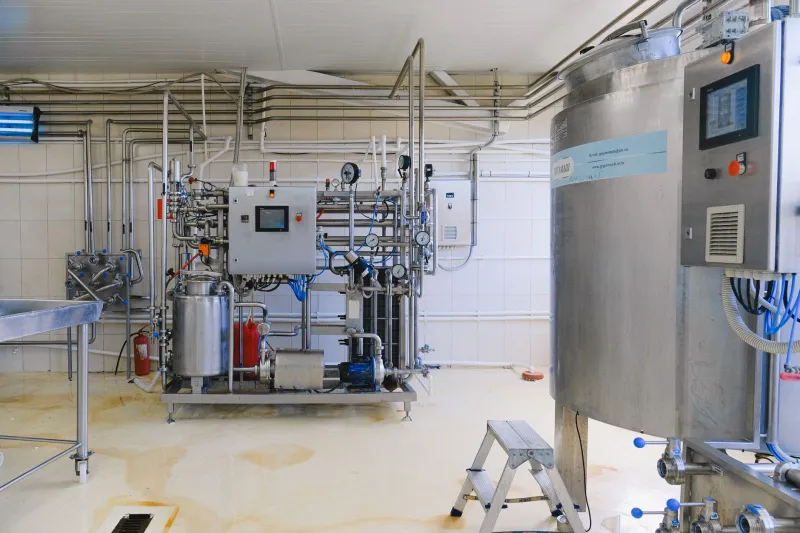
For many US manufacturing facilities, the vacuum and material handling infrastructure was never planned as a unified system. It evolved. A pump was sourced from one supplier to meet an urgent production need. A conveying unit came from a second vendor during a capital equipment refresh. A filtration assembly was added later from a third party because the lead time was shorter. Over time, what should function as an integrated operational backbone becomes a patchwork of components that were never designed to work together.
This pattern is more common than most facility managers care to acknowledge. And its consequences extend well beyond the occasional maintenance headache.
The Anatomy of a Fragmented Vacuum Infrastructure
Fragmentation in vacuum systems typically develops through one of three pathways: decentralized purchasing decisions made at the department level, reactive procurement during equipment failures, or gradual facility expansion without a corresponding systems integration plan.
In each case, the outcome is structurally similar. Different subsystems operate on incompatible communication protocols. Control interfaces do not share data. Replacement parts are drawn from separate inventories maintained by separate service agreements. When a failure occurs anywhere in the chain, diagnosing the root cause requires engaging multiple vendors who may offer conflicting assessments — and who have no contractual obligation to ensure their equipment performs well in conjunction with a competitor's.
The result is not simply inconvenience. It is a quantifiable drag on operational performance.
Where the Costs Actually Accumulate
The financial impact of multi-vendor fragmentation is distributed across several cost centers, which is precisely why it tends to escape scrutiny during standard budget reviews.
Redundant components and over-specification. When systems from different vendors cannot communicate load requirements to one another, facilities frequently over-provision capacity as a buffer against uncertainty. This means running equipment at higher-than-necessary energy consumption levels and maintaining inventory for components that serve overlapping functions. A 2023 industry analysis found that facilities operating three or more vacuum system vendors reported average component redundancy rates 18 to 24 percent higher than those operating under a consolidated vendor structure.
Diagnostic delays and extended downtime. In a multi-vendor environment, a system fault triggers a chain of vendor notifications rather than a single point of accountability. Each supplier's technical team evaluates only the equipment within their scope, creating diagnostic blind spots at the interfaces between systems. These gaps extend mean time to repair — sometimes by days — and translate directly into production losses that dwarf the cost of the repair itself.
Maintenance contract inefficiencies. Separate service agreements with separate escalation procedures, separate parts pricing structures, and separate preventive maintenance schedules create administrative overhead that consumes engineering and procurement resources. More critically, they produce inconsistent service intervals across a system that should be maintained as a whole.
Training and knowledge fragmentation. Technicians must maintain working familiarity with the operational logic, interface conventions, and failure modes of multiple product lines. In an environment already constrained by the well-documented shortage of skilled vacuum system technicians in the US, this multiplies the burden on existing staff and increases the risk of operator error during troubleshooting.
A Real-World Illustration of Integration Failure
Consider a mid-sized plastics processor in the Midwest that operated a vacuum conveying system assembled from components sourced across four vendors over a twelve-year period. The central vacuum pump, the material receivers, the filtration housings, and the control panel were each sourced independently. When the facility attempted to implement a predictive maintenance program as part of a broader operational improvement initiative, the project stalled almost immediately.
The control system for the vacuum pump could not export data in a format compatible with the SCADA platform the facility used for other equipment monitoring. The material receivers had no embedded sensors at all. The filtration housings required manual inspection on a separate schedule maintained in a spreadsheet. Integrating these systems into a unified monitoring architecture would have required either replacing functional equipment prematurely or investing in custom middleware development — an expense that had never been anticipated in the original capital plan.
The facility ultimately spent more on the integration attempt than the combined purchase price of two of the four original components. And the project was only partially successful.
Consolidation Versus Middleware: Choosing the Right Path
For facilities currently operating fragmented vacuum infrastructure, the strategic question is not simply whether to consolidate, but when and how. Two primary approaches exist, each appropriate to different operational and financial circumstances.
Vendor consolidation involves migrating to a single supplier — or a small number of pre-integrated partners — capable of providing matched components across the full system. This approach delivers the most complete resolution to fragmentation-related inefficiencies, but it requires capital investment and carries transition risk if existing equipment must be decommissioned before end of useful life. It is most appropriate for facilities planning significant capacity expansions, undergoing facility redesign, or operating equipment that is already approaching replacement thresholds.
Middleware and integration platforms offer a less disruptive near-term solution by creating a data and communication layer that bridges incompatible systems. Industrial IoT gateways and protocol translation tools have matured considerably over the past several years, making it feasible to pull operational data from disparate vacuum subsystems into a unified monitoring environment without replacing the underlying hardware. This approach preserves existing capital investment but introduces its own complexity and ongoing maintenance obligations. It is most appropriate for facilities with relatively new equipment across multiple vendors, or those for whom full consolidation is not financially viable in the near term.
The decision framework between these two paths should weigh three variables: the remaining useful life of existing equipment, the criticality of integrated monitoring to operational goals, and the total cost of ownership over a five-to-seven-year horizon under each scenario.
Building a Vendor Rationalization Case for Leadership
For facility managers who recognize the problem but face internal resistance to consolidation investment, the most effective approach is constructing a cost visibility document that aggregates the fragmented expenses described above. This means pulling maintenance contract costs, parts inventory carrying costs, documented downtime events attributable to integration failures, and engineering hours spent on multi-vendor coordination into a single annual figure.
In most facilities where this exercise has been conducted rigorously, the total cost of fragmentation exceeds what leadership had assumed — often substantially. The business case for consolidation or structured integration investment becomes considerably easier to advance when the alternative is expressed not as a capital expenditure, but as a continuation of a known and quantifiable annual loss.
The Strategic Value of System Coherence
Vacuum and material handling infrastructure is not a peripheral concern for US manufacturers. It is foundational to production continuity, regulatory compliance, and energy efficiency. Treating it as a collection of independent procurement decisions rather than an integrated system architecture carries consequences that compound over time.
The manufacturers that will operate most competitively over the next decade are those that approach their vacuum infrastructure with the same strategic intentionality they apply to their production equipment. Vendor rationalization is not a procurement preference — it is an operational imperative.